Security & surveillance
CCTV Cables
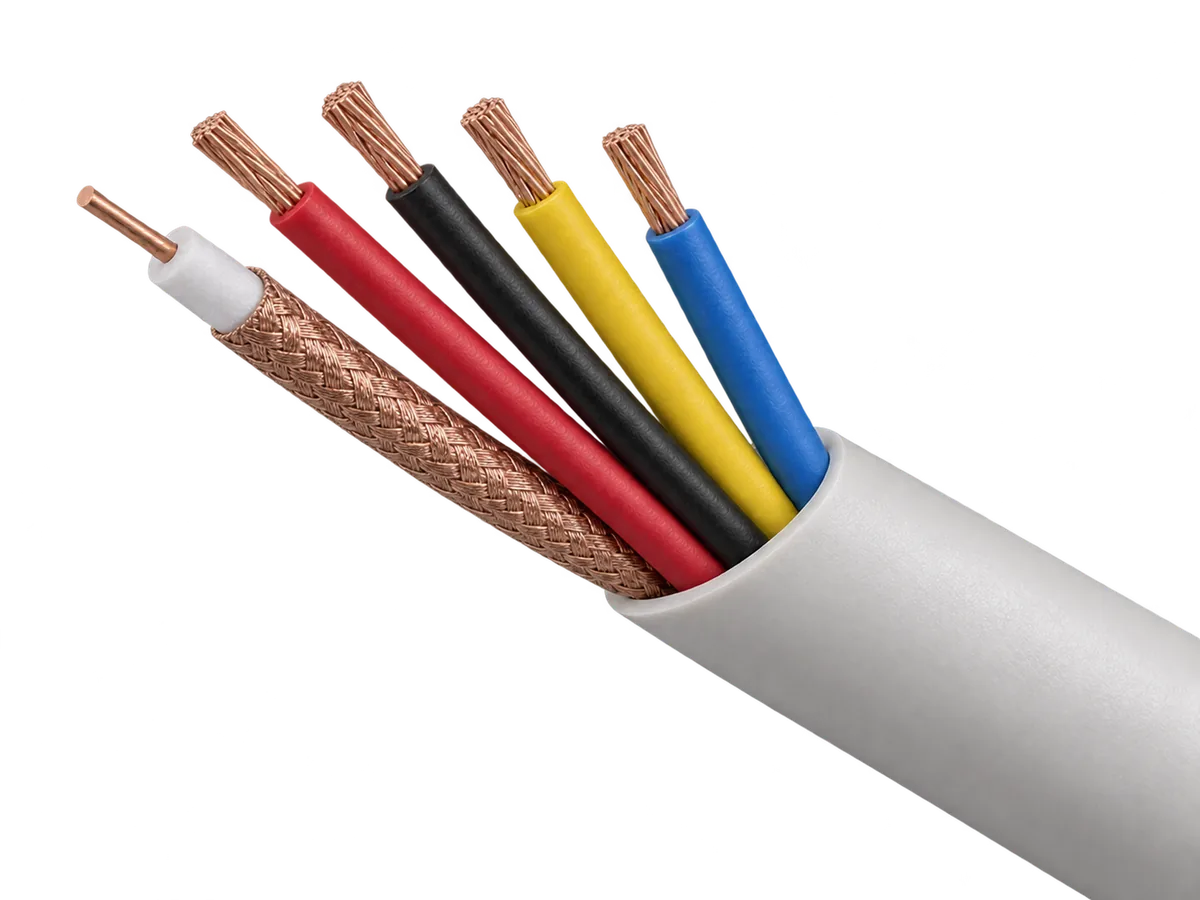
CCTV cables for camera and surveillance systems. We make RG59 coaxial cable and combination camera wire that carries video and power in one run.
- RG59
- Coax + 2 core
- Coax + 4 core
- Video + power
ISO 9001:2015 certified. Manufacturing since 1994.
About our CCTV cables
- Types
- RG59, coax + 2 core, coax + 4 core
- Carries
- Video and power
- Power cores
- Stranded copper
- Screen
- Braided, on the coaxial core
- Sheath
- PVC outer sheath
- Delivery
- Across Pakistan
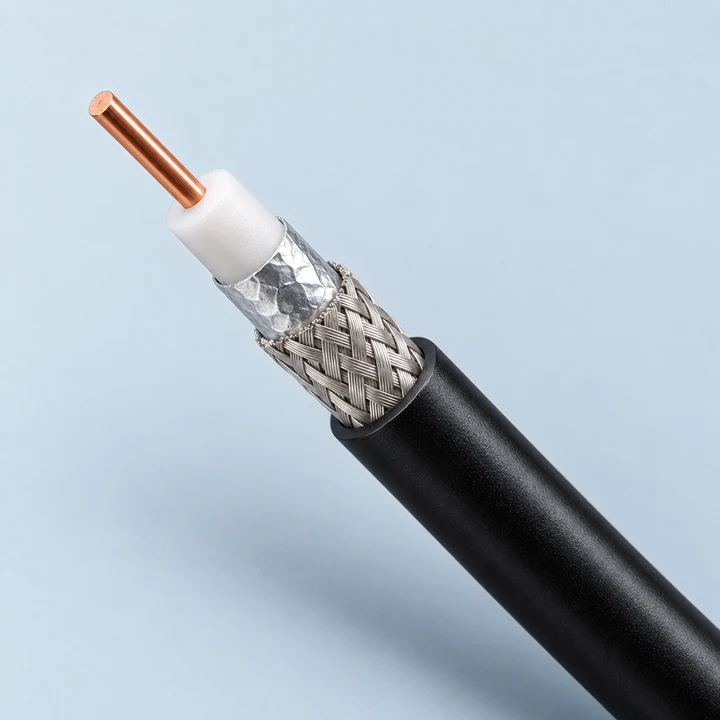
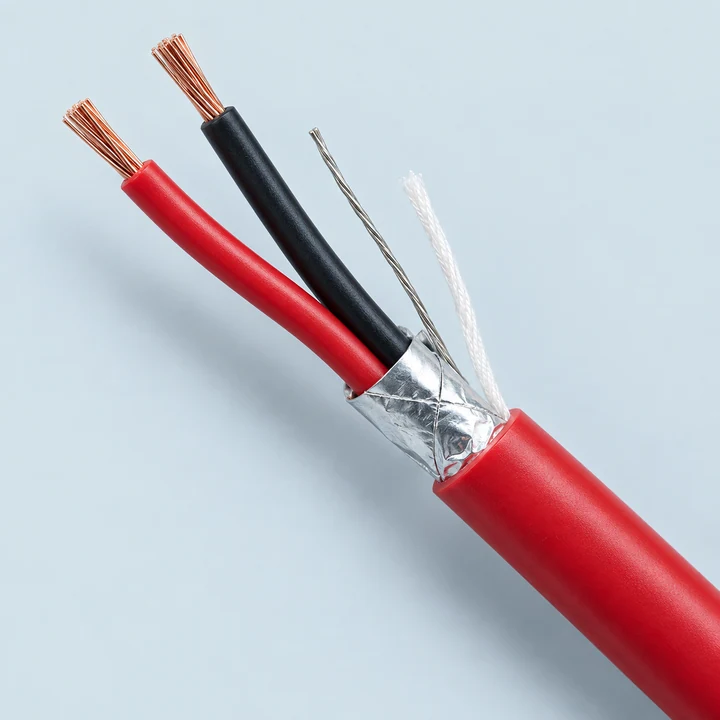
A CCTV camera needs two things from its cable: a path for the video signal back to the recorder, and power. Our CCTV cables are also called camera wire. They include RG59 coaxial cable for video, and combination cables that put a coaxial core and separate copper cores inside one sheath, so each camera needs only a single cable run.
The coaxial core carries the picture and is screened by a woven braid to keep interference out. The extra cores, colour-coded red, black, yellow and blue, carry power to the camera and, where the system needs it, audio or control signals. We make them in Pakistan and deliver to installers and security companies in every city.
Used for
DVR recorders
Shops & offices
Homes & warehouses
Construction
How CCTV cable is built
A coaxial core for video and four insulated copper cores, together in one outer sheath.
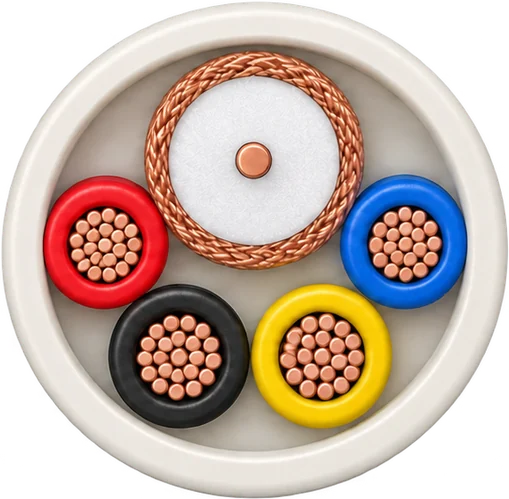
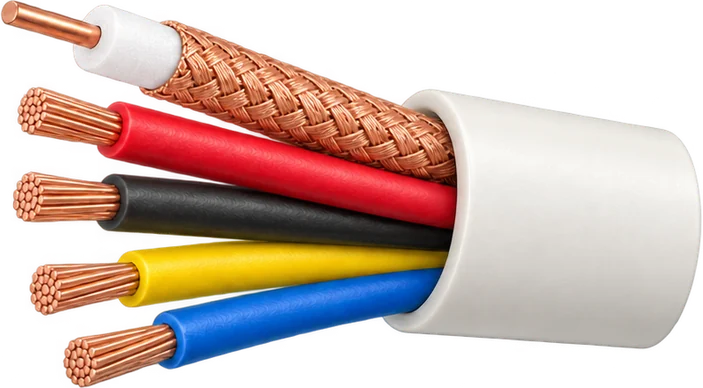
Illustrative combination-cable construction. Actual construction varies by product; diagram not to scale.
Coaxial centre conductor
The single conductor at the middle of the coaxial core. It carries the video signal from the camera.
Dielectric
The white insulating layer that holds the centre conductor in place and sets the cable's impedance.
Braided screen
A woven wire braid around the coaxial core only. It shields the video signal and completes its circuit.
Copper cores
Four stranded copper conductors that carry power to the camera and, where needed, audio or control signals.
Core insulation
PVC insulation in red, black, yellow and blue, so each core is easy to identify at both ends.
Outer sheath
One PVC sheath around the coaxial core and the copper cores, so a camera needs only one cable run.
CCTV cable types
Match the cable to your camera system. Tell us the camera type and run lengths if you are unsure.
Which cable for which camera
A general guide. Follow your camera and recorder manufacturer's instructions.
- Analogue & HDCameras with BNC video outputCoax + 2 core, or RG59
- With audio or PTZCameras needing extra signalsCoax + 4 core
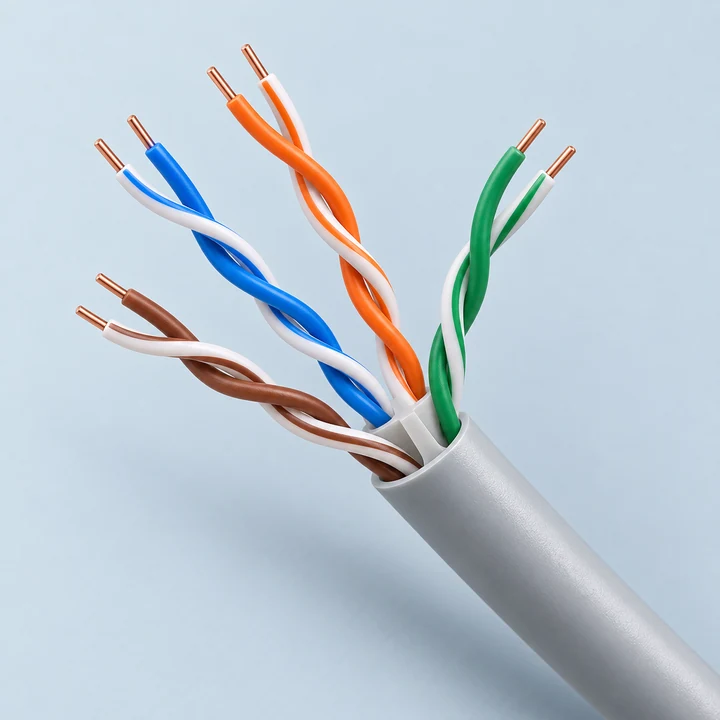
- IP camerasCameras with a network portCAT6 network cable
The coaxial core is available with a copper or copper-clad steel (CCS) centre conductor: tell us which you need, with the cable type, quantity and delivery city.
Made in Pakistan, tested and documented
Manufacturing since 1994
Made at our Lahore factory and delivered to customers across Pakistan for over three decades.
ISO 9001:2015 certified
Certificate CV/QMS/AC/536 issued by CertVeritas. Scope: manufacturing of electrical wires and cables.
Test reports on request
Ask for applicable PCSIR product test reports and copper-purity reports when reviewing your cable choice.
CCTV Cables FAQs
Which cable is used for CCTV cameras?
Analogue and HD cameras with a BNC video output use coaxial cable, most often RG59, or a combination cable that carries video and power together. IP cameras with a network port use CAT6 network cable instead. We make all three.
What is a combination CCTV cable?
It is a cable with a coaxial core and separate copper cores inside one outer sheath. The coaxial core carries the video signal and the copper cores carry power to the camera, so you pull one cable to each camera instead of two. We make the commonly used combinations: coax with 2 power cores, the usual CCTV cable in Pakistan, and coax with 4 cores, often called 4+1. Other combinations, such as 3+1, are made on request.
Is the coaxial core copper or CCS?
Both are available. Copper-clad steel (CCS) has a steel centre with a copper skin and suits ordinary video runs at lower cost. An all-copper centre conductor has lower resistance and is the better choice for long runs. The separate power cores are stranded copper. Tell us which you need and we will quote that cable by name.
What are the four coloured cores for?
They are separate insulated copper conductors alongside the coaxial core. Two are normally used to power the camera. The others are available for audio, alarm inputs or control signals for moving (PTZ) cameras, depending on your system.
What size are the power cores?
Power-core sizes differ from one cable to another. A thicker core loses less voltage, so it can power a camera over a longer run. Tell us your longest run and the camera's power needs, and we will quote a suitable core size.
RG59 or RG6 for CCTV?
RG59 is thinner and more flexible, which makes it easier to run and terminate at cameras, so it is the usual choice for CCTV. RG6 is thicker with lower signal loss and is sometimes used for longer runs. Both are 75 Ω cables.
How far can I run a CCTV cable?
The distance depends on the camera technology, the cable and the power supply, so check your camera and recorder manufacturer's guidance. On long runs the power cores lose voltage, so the camera may need a supply closer to it. Tell us your run lengths and we will help you choose.
What is the CCTV cable price in Pakistan?
Price depends on the cable type and quantity. Send your requirement through the quote form or WhatsApp for current prices and delivery to your city.
Other cables you may need
Get a quote
Request a CCTV cable quote
Share the size, quantity and delivery city. The form opens WhatsApp with your enquiry ready to send.
WhatsApp Business0335 4172122Emailazizcablesltd@gmail.comVisit / locationMubarak Plaza, opposite Canal View Gate No. 3, Multan Road, Lahore, Pakistan
What happens next
- Share the size, quantity and delivery city.
- Our team reviews the details and confirms availability.
- Receive a quotation for the agreed size and quantity.
Request a quote
This opens WhatsApp with your enquiry. Review the message and send it to our team.